
Building the F-35 capability becomes concrete - the first F-35A is scheduled to arrive in Finland in the autumn
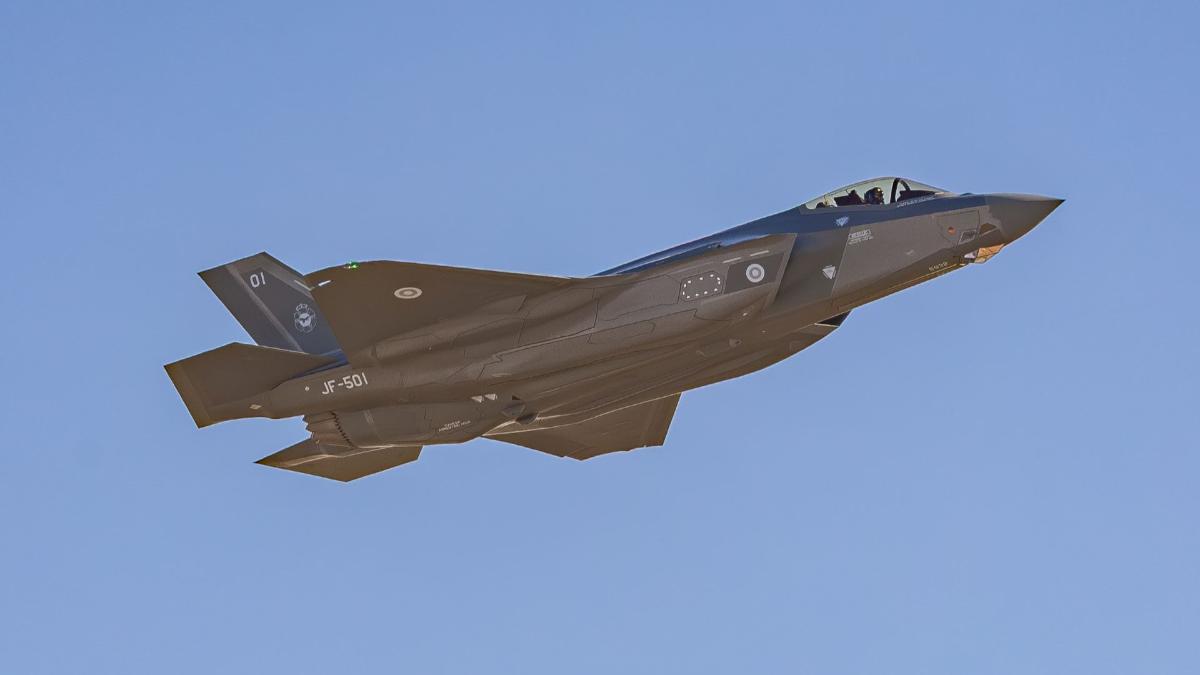
The introduction into service of the F-35 capability progresses, and the first multirole fighters will be flown to Finland this autumn. In this article, the Commander of the Finnish Air Force and the Director of the F-35 Programme explain details of how the service introduction of the fighter jet in the course of the year will take place.
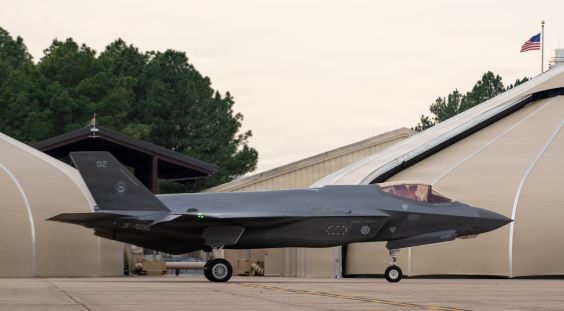
When it comes to the service introduction of the F-35 capability, the year 2026 will be significant in its concreteness: Procedures related to the airworthiness and acceptance inspections of the Finnish Air Force F-35A fleet were launched in the United States, at Ebbing Air National Guard Base in Fort Smith, Arkansas when Finland’s first F-35A (Joint Fighter, JF), designated JF-501, arrived at the base in January. In February, the first Finnish Air Force pilot detachment started the theory and simulator part of the F-35 initial training at Eglin Air Force Base, Florida. The first initial training detachment of the aircraft maintenance personnel completed this training phase. More Finnish Air Force personnel to receive F-35 training will travel to the United States in the course of the year.
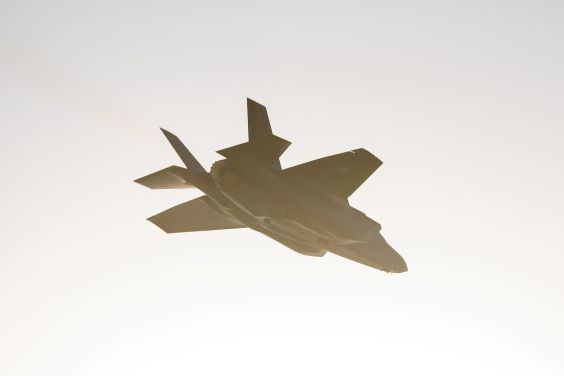
The Finnish personnel will start flight operations with the F-35 at Ebbing ANGB late in the spring of 2026. In the autumn, the first Finland’s F-35s will be flown to Lapland Air Wing, Rovaniemi, which is the first Finnish Air Force main air base to introduce the F-35 capability into service. Karelia Air Wing in Rissala, Kuopio will receive its first F-35A fighters in 2028.
In 2026, the F-35 will become a part of the everyday routines of an increasing number of Defence Forces personnel as units get progressively assigned responsibilities for operating the capability.
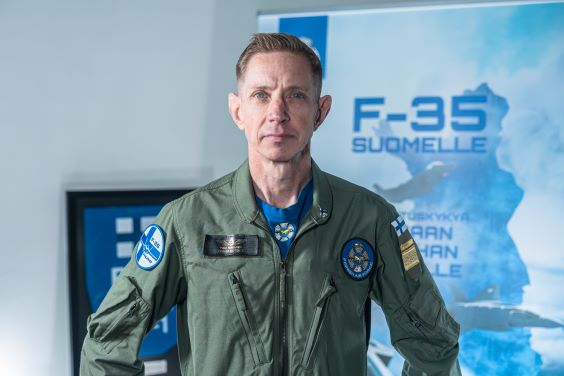
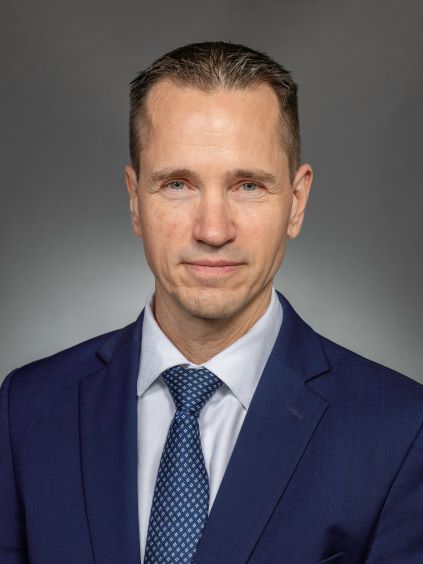
– Getting ready for the introduction of the F-35 capability advances according to plans in all sectors. The ongoing preparations involving the system in its entirety are being achieved in Finland and the United States advancing on schedule. I can be happy for the programme moving forward, but a great deal of work is yet to be done before we get to receive the first fighter jets in Finland. For example, as far as the infrastructure building projects are concerned, the number of details increase and become concrete as the time of the completion of the facilities approaches, Commander of the Finnish Air Force, Major General Timo Herranen says.
In 2025, essential milestones were reached in the introduction of the F-35 capability: At the Lockheed Martin plant in Fort Worth, Texas, USA, the production of Finland’s first F-35A multirole fighters progressed and Finnish Air Force pilots’ initial F-35 training was laid groundwork for by simulator training events. The first Air Force aircraft maintenance detachment embarked on F-35 initial training at Eglin Air Force Base, Florida in September 2025. Towards the end of the year, the first Finland’s F-35As received their shape at the Lockheed Martin plant in Fort Worth, and in December, the first Joint Fighter, the JF-501 flew its maiden flight, it was introduced to the public at a rollout ceremony and handed over to Finland.
Back in Finland, the building of infrastructure for the F-35 at Air Force bases and sites involved in the direct industrial participation related to the F-35 Programme progressed as planned in 2025. What is more, in December, the AMRAAM AIM-120 D-3 air combat missile was procured to complement the F-35 fighter jet’s weapons suite.
The Defence Forces’ joint capability is being built
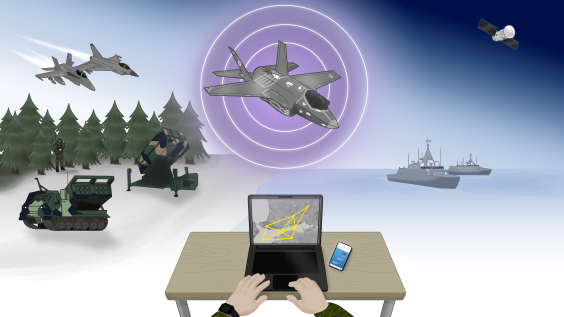
The Defence Forces has continued integrating the F-35 capability into Finland’s defence system. The F-35’s features will increase the combat capability of the Army and Navy as well, because its capabilities will bring added value to the other Services in the form of situational awareness and new types of weapons. Using these new features has already been examined together with the Army and Navy in a number of joint war games, and the work continues. Aspects calling for change in operational planning, leadership, execution and also evaluation are comprehensively considered in this development work.
– The Army, Navy and Air Force will fight together with significant capabilities brought by the F-35. We prepare tactics and, for example, exchange of information and use of fire in close cooperation by war gaming and exercises, among other things. Space capabilities are related to several use cases. At such events, from the national defence perspective, we examine the synchronisation and employment principles of new capabilities from the points of view of operational leadership and use of fire, Commander of the Air Force, Major General Herranen says.
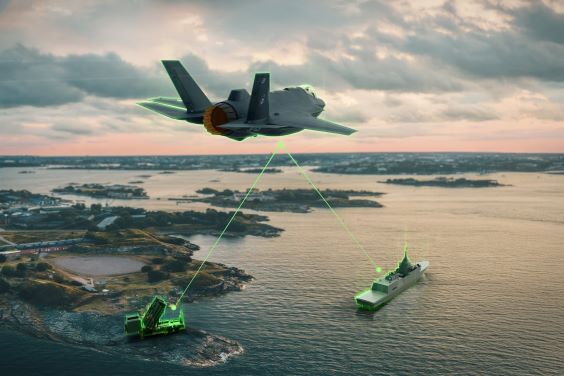
The F-35 will bring in new mission types, and it will be capable of taking part in the battle of the Army and Navy, too, more efficiently than the F/A-18 Hornet multirole fighter fleet currently in use. Joint operating and conducting multi-domain operations (MDO) - on the ground, at sea, in the air, in space, in the cyber and information environment and on the electromagnetic spectrum - guide the Defence Forces in the examination of how to plan its principles of use towards using the entire defence system as a whole as required by the situation at hand even more efficiently than before.
– In this respect, the F-35 can be called a force multiplier and quarterback: its sensors detect and relay information that was not available earlier and generate it for the use of the Army and Navy. The weaponry and electronic capabilities of the aircraft generate kinetic and non-kinetic striking power to targets pointed by the other Services. With the weaponry acquired by us for the F-35, we will be able to conduct also new types of mission, including engaging new types of targets, Herranen adds.
Procurement decisions regarding the F-35 system main weaponry have been made the most recent of which being the acquisition of the AIM-120D-3 AMRAAM air combat missile in December 2025. The weapon suite of the F-35 can be complemented up until 2035, which will make it possible to select the most recent weapon types for the use of the Air Force, as well as possible supplementary purchases and specifications involving acquisitions already made.
Production and deliveries go smoothly - first eight aircraft completed
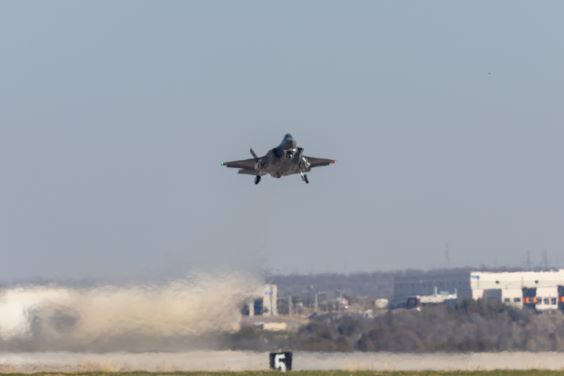
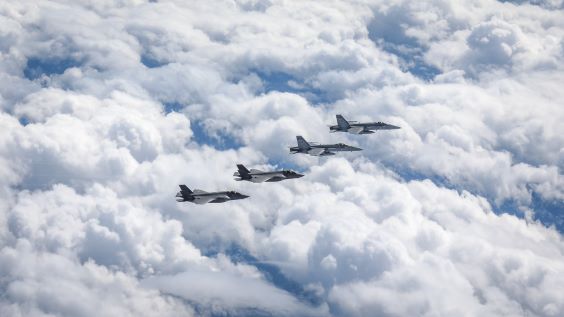
The deliveries of Finnish F-35A multirole fighters set off with JF-501 being handed over to Finland on 23 December 2025. It was ferried to Ebbing Air National Guard Base for the practical part of the initial training on 20 January 2026. In the spring, a total of eight aircraft will be delivered to the base. The Air Force will introduce them into use when pilot training starts. These fighter jets will stay at the air base for training purposes until the beginning of 2028. Aircraft with registration numbers from JF-509 onwards will be delivered directly to Finland starting from the end of this year.
The Defence Forces will keep a close eye on the progress of the production and deliveries of its F-35 fighters.
– We will keep a watchful eye on the advancement of the production, because it is essential to the building up of our F-35 capability. As a matter of fact, we already have the JF-509–516 jets in sub-assembly and final assembly in Fort Worth. In addition to the fleet itself, there are, of course, lots of other material that will be delivered to Finland, including weaponry, simulators and ground support material, Director of the F-35 Programme, Colonel (ret.) Henrik Elo says.
Before flight activities can start, Air Force and Defence Forces Logistics Command personnel will conduct airworthiness and acceptance inspections on all Finnish F-35 fighter jets. If they pass the inspections, each aircraft will be granted an individual certificate of airworthiness, after which they will be ready to be used for pilot training. The JF aircraft were granted type certification on 18 February 2026. This transferred responsibility for continuing airworthiness control of the JF fleet to Finland aimed at ensuring the availability and safe use of the aircraft.
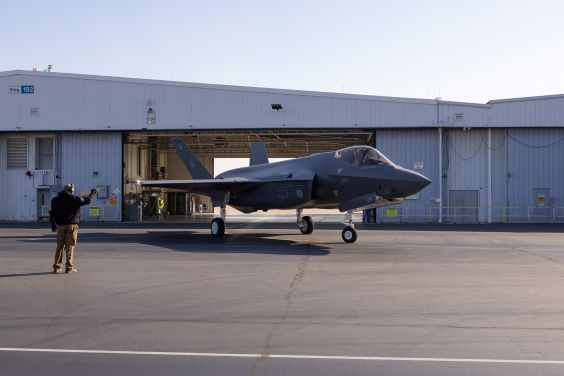
Persons with keen eyes have noticed that the Finnish F-35A fighter jets are currently not equipped with drag chute pods. Drag chute pods will be installed on the JF fleet in Finland. In Finland, modifications and retrofits, too, will later be made on the fleet in order to bring the system up to the Block 4 configuration in accordance with the procurement contract. In principle, the retrofits will be carried out in Finland either at an air wing or by an industrial partner.
Domestic industrial partners play an essential role in maintaining the F-35 capability. Elements are being built in Finland which are aimed at supporting the security of supply of the F-35 system as part of the entity of the industrial participation involving the F-35.
– F-35A aircraft and line maintenance procedures have been planned to be carried out mainly at Air Force brigade-level units. The maintenance and repair procedures taking the longest time, and modifications can be completed domestically by strategic partners up to a certain level. As for the line and aircraft maintenance procedures that within the framework of the contracts of the programme have not been planned to be carried out in Finland, support will be sought from maintenance organisations abroad, F-35 Programme Director Elo says.
The maintenance and management of the life cycle of the F-35 system are decentralised. A number of regional maintenance and repair centres have been established in Europe, including a centre for F-35 mainframe overhaul in Italy and F135 engine maintenance centres in Norway and the Netherlands.
The F-35 Program has been built to be multinational, and production has taken place in a number of different countries from the very beginning. By decentralising production, several F-35 user countries and their industries have had an opportunity to become F-35 component manufacturers and system maintainers. In Europe, F-35 components are manufactured in Great Britain, Germany and Italy, among others, - and now also in Finland. Currently, F135 engines are assembled only in the United States and Finland, in Linnavuori, Nokia.
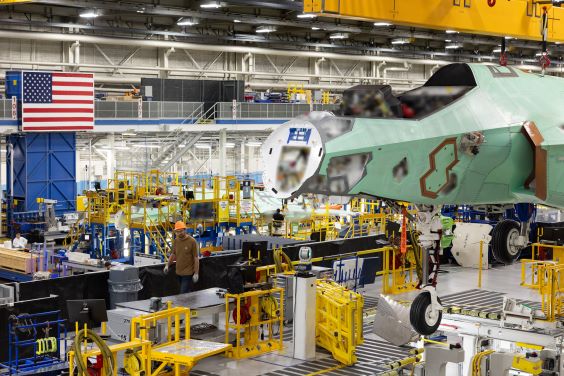
Decentralising production and maintenance will bring the F-35 Program a number of advantages. This model of operating, for example, makes the purchasing countries committed to the program for example because it increases employment, boosts production and maintenance capacity and leverages these countries’ special expertise. All in all, decentralisation strengthens the crisis resilience of the entire F-35 Program.
– When the same components can be manufactured in a number of different countries and assembly and maintenance are also decentralised, any potential challenge faced by one production or assembly establishment does not get to impact the whole fleet. After momentary challenges involving, for example, the availability of raw materials, production capacity is striven to be restored very efficiently to an even higher level than normal. For example last year, Lockheed Martin delivered 191 F-35 fighters to its customers. The annual production of the F-35 is several times higher than the production of any other Western fighter jet, which shows the scale and efficiency of the production capacity, Colonel (ret.) Elo specifies.
The F-35 fighter jet has been chosen by 20 countries, including 13 European countries. Globally, the F-35 fleet has exceeded the total of 1,300 aircraft in service, and production continues in great volumes.
The F-35 initial training makes it possible to start activities in Finland
The initial training of the Air Force aircraft maintenance personnel started according to plans at Eglin Air Force Base, Florida in September 2025 with pilot training setting off in February 2026. Lieutenant Colonel Mikko Takalo is serving as the most senior officer of the first aircraft maintenance detachment undergoing F-35 initial training and Lieutenant Colonel Lasse Louhela as the pilot detachment’s most senior officer. The aircraft maintenance detachment led by Takalo completed the theory and simulator training phase on 20 February 2026.
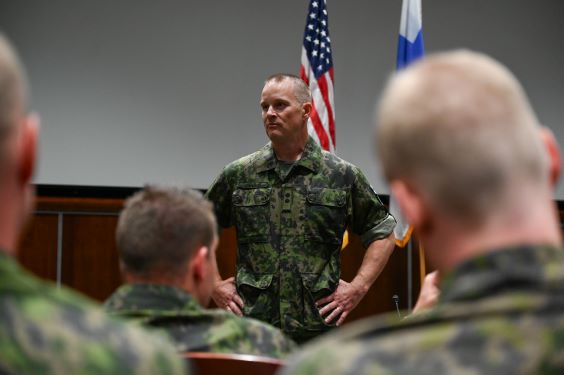
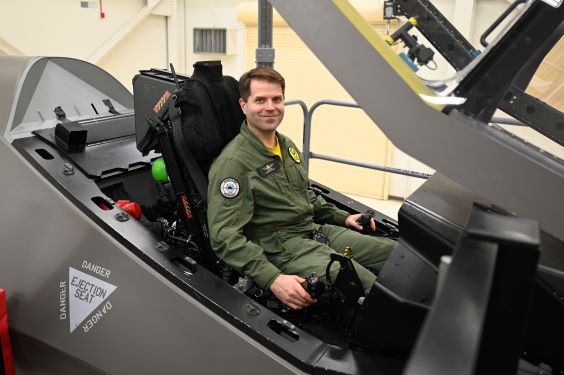
– The training at Eglin is a package that works well. In the autumn, our training team received a positive welcome and the training started efficiently. Cooperation with counterparts has been fluent, and the studies have progressed as planned. Our trainees have spoken highly of the course and the instructors’ feedback on the Finns’ know-how and ability to learn things has been commendable, Director of the F-35 Programme Elo says.
In addition to the aircraft maintenance personnel and pilots, other Defence Forces personnel as well are bound to receive initial training at Eglin AFB in F-35 information systems, fleet management, logistics, mission support, flight equipment maintenance and target devices, for example.
After the theory and simulator training received in Florida, the aircraft maintenance personnel and pilots move on to practical training which is part of the F-35 initial training at Ebbing ANGB in Fort Smith, Arkansas in phases starting from April 2026. At the moment, there is a liaison officer and personnel from the Air Force and the Finnish Defence Forces Logistics Command involved in airworthiness and acceptance inspections working in Fort Smith. Ebbing ANGB has been preparing for the arrival of the Finnish pilots and aircraft mechanics for quite a while now.
– We have a good relationship with the actors of the local air wing (188th Wing and 85th Fighter Group), the Lockheed Martin personnel and Polish pilots and mechanics undergoing training at the same time, which will help our personnel get integrated into the practical training phase. The welcome we received by Ebbing ANGB and the City of Fort Smith in this preparation phase has been exceptionally warm and smooth.
The Finnish personnel undergoing training in the United States plays an essential role in the introduction into service of the F-35 capability. As the personnel in initial training study the system, they also conduct planning as for how to distribute the know-how further in Finland. Of the Finnish personnel, approximately 150 persons in total receive F-35 initial training in the United States. The figure includes about 80 aircraft maintenance personnel, approximately 20 pilots and some 50 other personnel to be trained. Aircraft maintenance and other courses will be provided in 2026. Pilot training taking place in groups in the United States will continue to the early 2028.
Air bases and prerequisites for operating are being built
The infrastructure building and changes involving the F-35 Programme as part of the development of the air bases of the Finnish Air Force have progressed according to plans, and some infrastructure has been completed even ahead of schedule. The construction work and changes make it possible to operate the F-35 system according to the Air Force’s principles of employment and meet the safety requirements of the manufacturer and the administration of the United States.
– All in all, the building of infrastructure and changes made at the bases and the industry have progressed well and according to schedule. The Finns have received really good feedback from their American evaluation group as the planning and building of different areas have progressed. However, in order for plans to materialise, numerous details remain to be achieved according to a prior schedule. I will not take a breath until the last facility has been finished, Director of the F-35 Programme Elo says.
Most of the construction work and changes at the Rovaniemi airbase will be completed in 2026. Before the first F-35 fighters arrive, F-35 simulators will be installed in the facilities of the airbase with which training will start in parallel with pilot training. Similarly, infrastructure building and changes at the Rissala airbase will be finished according to schedule before Karelia Air Wing receives its first F-35 fighters in 2028.
In addition to the defence administration, the impacts of the F-35 acquisition are also visible in industry where industrial participation projects involving the F-35 advance. For example, direct industrial participation partner Patria has started F135 engine assembly in Linnavuori, Nokia, and is beginning manufacture of forward fuselages in Halli, Jämsä.
– From the perspective of the maintenance of our F-35 fleet, the activities conducted in Linnavuori are crucial. The maintenance activities of the F135 engine to be conducted there starting from 2030 will strengthen the domestic security of supply of our fleet, because the engine maintenance, repair and update capabilities will be available in Finland, Programme Director Elo says.
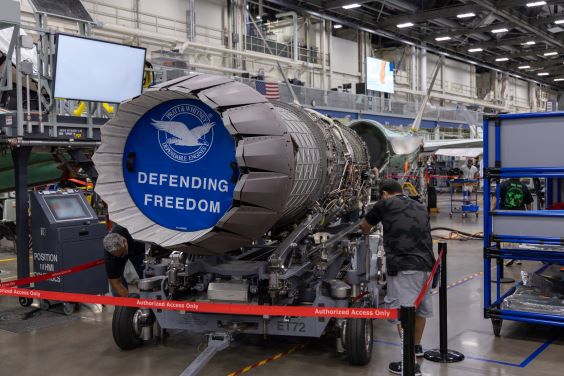
The industrial participation involving the F-35 is directed by the Ministry of Defence. The Finnish companies involved in direct industrial participation include Patria, Insta, Millog, Finnair and Combitech. In addition to the Defence Forces working with these strategic partners, it has a number of Finnish companies and research establishments that are involved in indirect industrial participation.
– The cooperation of the Defence Forces with the industry and other partners, I think is a fine example of the attitude of the Finnish society: we work together for our common safety by combining the competence and workforce of several lines of business. The industrial participation involving the F-35 is a good example of this, as are other forms technological know-how and innovation, for example satellites and simulators, Elo observes.
Get started in the autumn - Rovaniemi ready to receive Joint Fighters
The first Finnish F-35A multirole fighters arrive in Finland in late 2026. After their arrival, the air wing will conduct airworthiness and acceptance inspections on the fighter jets before flight operations can start.
– The introduction into service of a new main fleet is always a big moment - that is when a new era begins. Training starting in Finland is a very significant milestone towards full capability. In the years to come, the integration of F/A-18 and F-35 operations with other developing capabilities will be of central importance. Work remains to be done, and when new capabilities are introduced, one must always be ready to meet new challenges. Our large cooperation network with other F-35 operating countries will be there if we need assistance, says Commander of the Air Force, Major General Herranen.
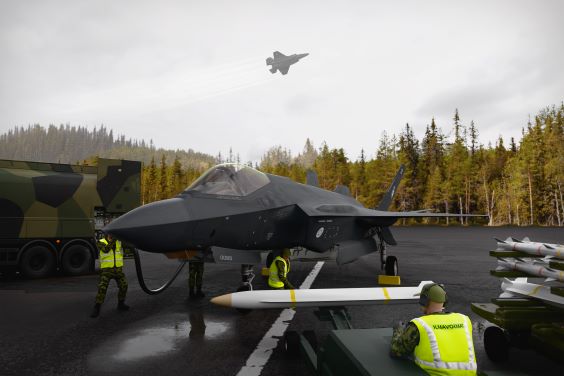
The aircraft maintenance training organised in Finland will start as soon as the fighter jets arrive, and pilot training in January 2027 at the latest. When starting training in Finland, the Air Force will also receive support from Allies: close allied countries have been requested to provide support for pilot training by sending pilot instructors. Norway and Denmark have already responded by saying they will support operating and training by sending pilot instructors, and the Netherlands offers support in setting up academics, simulator and mission oriented tactical training. What is more, the introduction into service of the F-35 in the Air Force and industrial partners will be supported by American manufacturing companies’ personnel deployed to Finland for a fixed period of time. They will provide practical-level support to Finnish personnel.
Conversion training for the personnel of the Air Force’s other functional areas and reservists will be implemented along with the introduction the F-35 capability. For reservists, F-35 conversion training will be implemented in the form of refresher training exercises. The goal is to be able to start exercises in about two years from the start of operating. F-35 training for conscript assistant mechanics will set off in 2027. The role of conscripts and reservists with regard to working with the F-35 will remain roughly the same as working with the F/A-18 fleet, which means that transferring to this new aircraft type will not result in considerable changes to their duties working with Air Force multirole fighters.
Deepening cooperation
The cooperation between F-35 operating countries is constantly being developed, and the Finnish Air Force is closely involved. One of the goals is, among other things, to promote the international cross-servicing and joint operating ability of F-35 fighters, which will widen and strengthen the operational efficiency of the F-35 user community in Europe. Communication and an atmosphere of sharing best practices prevails in the F-35 user community across the organisation - from commander level to hands-on technical experts.
– Cooperation and exchange of information in the F-35 user community is tightly knit. In addition to information exchange contributing to the introduction of the F-35 capability, promoting the joint operating capability is a specific interest of ours, because we recognise the great potential of the European F-35 user community for defending Europe. In the mid 2030s, Europe will have more than 700 F-35 fighter jets, Director of the F-35 Programme Elo says.
The European F-35 user community is strengthened by Nordic cooperation, especially as all the Nordic countries are currently members of NATO. The activities of the Combined Air Operations Centre, CAOC launched by NATO in its Northern area last year comprise Nordic air operations. When the CAOC reaches its final operational readiness, an estimated 15 Finnish personnel will work there.
– In the coming years, it would be possible to command operations of our countries’ air forces from the Combined Air Operations Centre in Bodö, Norway. In practice, we can talk about a Nordic air force. The fact that pilot instructors will be deployed to Rovaniemi to provide support for the launch of the F-35 conversion training is a good example of the cooperation. At the Air Force Academy, Norwegian and Danish pilots have also been provided with training to fly jet trainers. This has been rewarding in every way, and the activities have been continued, Commander of the Finnish Air Force Herranen says.
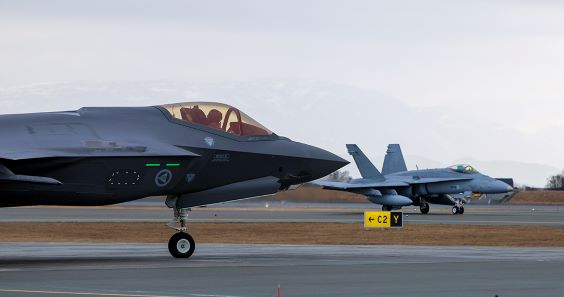
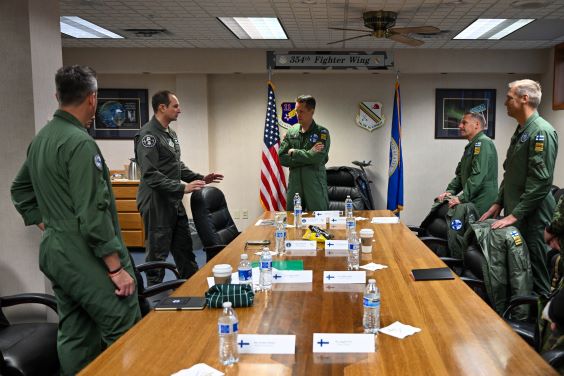
In addition to the close information sharing in the wider F-35 user community, direct cooperation with American actors has also been very active.
– Information sharing and dialogue on the military level and with the industry is absolutely continuous. At this stage already, among other things, the United States Air Force has invited Finnish personnel to exercises in the capacity of observers to see and learn about operating the F-35. What is more, we will acquire valuable information directly from F-35 users. For example, last autumn, Finnish personnel visited Eielson Air Force Base, Alaska, where we got to learn about U.S. personnel’s experiences of operating the F-35 in winter conditions. Similar information seeking and benchmarking visits related to practical operating will be made actively also in the future with the United States and other F-35 user countries, Director of F-35 the Programme Elo mentions.
The work continues
The preparation work conducted for years in the defence administration is already partly starting to turn into practical results in the course of this year. A lot has been achieved, but a lot remains to be done.
– The Defence Forces and our cooperation partners work relentlessly to achieve the introduction into use of the F-35. As a matter of fact, on a wider scale, the work is only just beginning, when the F-35 capability starts to the multiplied across the entire Air Force, the Army and Navy. Tactics and techniques fielded. The flows of material will be really massive, and we start to operate according to a new logistics concept. The whole time, the aim is to reach operational readiness and, along with the service introduction of the F-35, to keep up constant readiness with the Hornet fleet, Major General Herranen sums up.
The initial operational capability of the F-35 system will be reached at the beginning of 2028, when Lapland Air Wing will have introduced the F-35 and operates the F-35 only. In the course of 2028, Karelia Air Wing will receive its first F-35 fighter jets. The F-35 will reach full operational capability by the end of 2030. Until then, the Air Force will operate the F/A-18 and F-35A fleet side by side.
More information on the F-35 Programme and the capability introduction: The F-35 Programme to Yield Capability to the Entire Defence System


